Thank you for providing the title. Here’s an expanded 500-word version and a new, more polished title.
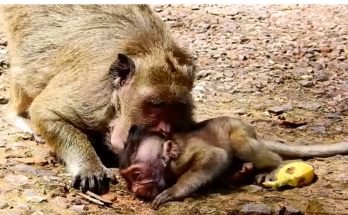
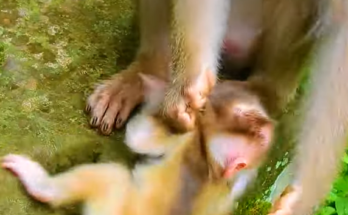
Original Title: Nasty Mother Monkey Don’t Share Some Foods to Her Baby
New Title: The Unusual Behavior of a Mother Monkey Refusing to Share Food with Her Baby
Expanded Content (Approximately 500 words):
In the animal kingdom, parental behavior varies widely among species, often reflecting survival strategies, environmental pressures, and instinctual care. However, there are moments when a mother’s actions can seem surprising or even harsh to human observers. One such instance involves a mother monkey who, surprisingly, refuses to share her food with her own baby. This behavior can seem unusual, especially considering that many primates are known for their nurturing and communal tendencies. Understanding why a mother monkey might act this way requires delving into animal instincts, resource availability, and survival priorities.
Primates, including monkeys, are highly intelligent animals with complex social structures. When observing a mother monkey hoarding her food and refusing to share it with her young, several explanations are possible. One common reason could be the scarcity of resources in her environment. In times of food shortage, a mother might prioritize her own survival over her offspring’s needs. By conserving her limited resources, she ensures her own strength and health, which are crucial for her ability to care for and protect her young in the long run.
Another factor could be the age or health of the baby. If the baby is very young or appears weak, the mother might perceive it as less capable of consuming the food she has. In some cases, she might be wary of sharing food that could be contaminated or that might attract predators or rivals. Mothers can sometimes be protective to the point of being exclusive, especially if they have experienced threats or have limited resources.
Behavioral patterns also play a role. Some mother monkeys are naturally more possessive or cautious. Their instinct is to safeguard their resources against potential theft or competition from other group members. Sharing food might expose her to risks, including losing her hard-earned sustenance or attracting unwanted attention from predators or rival males.
It is also important to consider the social dynamics within the monkey group. If the mother perceives a threat or feels that sharing might weaken her position within the hierarchy, she might choose to prioritize her own needs. In some cases, maternal behavior is influenced by the overall health and stability of the group, with some mothers being more protective and less sharing, especially under stressful conditions.
Despite these explanations, it is essential to remember that each animal’s behavior is shaped by a complex interplay of factors. What might seem “nasty” or selfish from a human perspective is often a survival tactic embedded deeply in their instincts. Observing such behavior provides insight into the challenges faced by wild animals and the harsh realities of their environment.
In conclusion, a mother monkey refusing to share food with her baby might appear harsh, but it is often rooted in survival instincts, resource scarcity, and social dynamics. Understanding these behaviors helps us appreciate the complexities of animal care and the tough choices faced by animals in the wild. It reminds us that, in nature, actions are rarely about malice but rather about survival and adaptation.
If you’d like, I can also help craft a shorter summary or focus on specific aspects of this behavior.